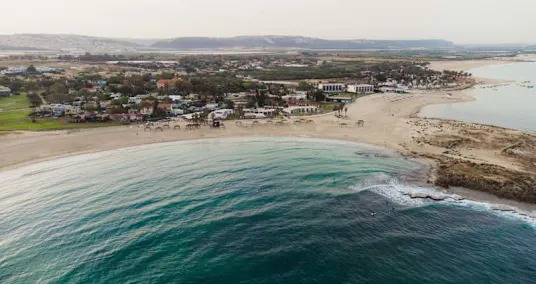
The discovery was made in an ancient shipwreck in the Dor Lagoon near the Carmel Coast, where archaeologists recovered nine pieces of unprocessed iron known as “blooms.”
Researchers from the University of Haifa said Wednesday that an underwater excavation off Israel’s northern Mediterranean coast uncovered what they described as the earliest known cargo of raw iron transported by ship, dating back around 2,600 years, Xinhua reported.
The discovery was made in an ancient shipwreck in the Dor Lagoon near the Carmel Coast, where archaeologists recovered nine pieces of unprocessed iron known as “blooms.” According to the university, the find provides direct evidence of how iron was transported in its earliest commercial stages.
The material was preserved in its original form, having solidified directly in a smelting furnace without undergoing forging or further refinement. Researchers said this distinguishes the cargo from later iron artifacts that typically show signs of shaping or tool-making.
Unlike copper and bronze, which could be melted into liquid form in ancient production processes, iron was heated with charcoal to produce a solid, porous mass. That mass was generally hammered to remove impurities and create denser material suitable for tools and implements.
The recovered blooms showed no indication of that secondary processing stage, suggesting they were transported immediately after production.

Earliest iron shipment discovered in ancient Mediterranean wreck
To determine the age and condition of the cargo, researchers conducted microscopic and chemical analyses.
Radiocarbon dating was also carried out on charred wood embedded in one of the pieces, helping confirm the timeline of the shipment. The findings were published in the journal Heritage Science.
Researchers said the cargo indicates that iron was being moved in raw form from production sites to other locations for further processing, pointing to a level of specialization in ancient manufacturing and trade networks in the Mediterranean.
The University of Haifa said the discovery provides new insight into early iron production and distribution practices in the region.
LATEST POSTS
- 1
 Wedding trip Objections in the US
 - 2Trump signs bill allowing whole milk to return to school lunches
- 3The most effective method to Perceive the Early Side effects of Cellular breakdown in the lungs
- 4How to watch Dick Clark’s New Year’s Rockin’ Eve with Ryan Seacrest: Start time, TV channel, performers and more
- 5Discussion on deployment of foreign troops ongoing, two sources tell 'Post'





- Evidence of lost baptismal rite stage uncovered in Byzantine era cathedral near Sea of Galilee
- RFK Jr. succeeds in changing hepatitis B recommendation | The Excerpt
- OECD: Iran war dampening global growth
- This Tiny Bright Yellow Frog Is One of the Most Toxic Animals on Earth
- Mickey Lee of 'Big Brother' fame dead at 35 after flu complications, family says
- 10 Delectable Specialty Mixed drinks
- 1st-ever disease gene fix, Alzheimer's blood test: 7 medical breakthroughs in 2025
- 7 Heavenly Espressos, One Do You Like?
- The 15 Most Motivating TED Discusses All Time