The initiatives involved the Social Equality Ministry and the Advancement of the Status of Women, the Israel Association of Community Centers (IACC), Tzalir Fund, and Mifal HaPais.
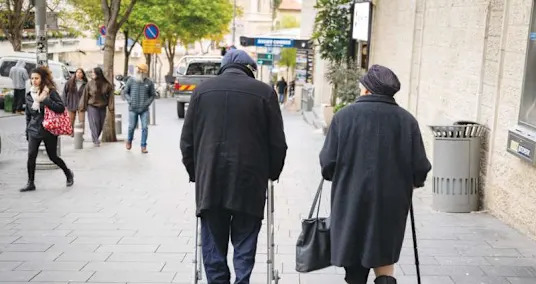
Thousands of senior citizens in Israel are set to receive Passover support this year through two separate initiatives: one aimed at making sure older Israelis did not spend Seder night alone and another designed to move elderly residents and people with disabilities from northern confrontation-line communities to protected hotels ahead of the holiday.
The initiatives involved the Social Equality Ministry and the Advancement of the Status of Women, the Israel Association of Community Centers (IACC), Tzalir Fund, and Mifal HaPais.
In the first initiative, the ministry and IACC said dozens of community centers across the country would host public Seders for senior citizens as part of an effort to ensure that no elderly person was left alone on Seder night.
According to the release, participating communities included Katzrin, Yesud HaMa'ala, Karmiel, Mevo'ot Hermon, Ma'alot-Tarshiha, Acre, Rosh Pina, Nesher, Binyamina-Givat Ada, Even Yehuda, Holon, and Ofakim. Registration was being handled through the *8840 hotline.

Initiative transfers vulnerable people to hotels with protected spaces
The second initiative focused on physical safety. Tzalir Fund and Mifal HaPais announced that they were expanding the fund’s “Banu” emergency project, which transfers senior citizens and people with disabilities from confrontation-line communities to accessible hotels with protected spaces.
The move added one million shekels to the initiative and was expected to help about 300 additional residents, while the broader framework was projected to house more than 2,000 people by Passover.
According to the release, the project was aimed especially at residents over the age of 75 and others unable to reliably reach a protected space in time during alerts. Eligible residents were being moved to hotels in Haifa and Tiberias, where the program was to provide transportation, accessible rooms, daily assistance, and social support. Volunteers were also preparing communal Seders in the hotels so residents could celebrate the holiday together despite the security situation.
Mifal HaPais chairman Itzik Lari said the step continued the organization’s wartime effort to respond to urgent needs in cooperation with local authorities and professional bodies. The release also said Tzalir Fund was founded by Zilit and Meir Jakobsohn, owners of Medison Pharma, and that additional partners in the initiative included Milgam and Medison Pharma. Together, the two Passover projects addressed two central concerns for older Israelis this year: loneliness at the holiday table and vulnerability during rocket alerts.
LATEST POSTS
- 1
 In these U.S. groups, deaths now exceed births. What’s happening?
 - 2How Trump's marijuana executive order could change medical research landscape
- 3UK to hold fresh pork, other affected Spanish products at border amid African swine fever outbreak
- 4Instructions to Keep up with Your Traded Teeth for Life span
- 5Israel issues notice that Ben-Gurion Airport flights likely restricted until at least April 16



- Miley Cyrus flashes a diamond ring on the red carpet, sparking engagement rumors with Maxx Morando: A timeline of their four-year relationship
- Euclid space telescope sees gorgeous cosmic cloud | Space photo of the day for Nov. 18, 2025
- Find Wonderful Stream Voyage Objections On the planet
- 8 Fundamental Stages: Novice's Manual for Secure Your Android with a VPN
- Want to be better about saving money in 2026? Try these money-saving tips for having a ‘low-buy’ January and beyond
- Elanco's drug gets emergency nod to treat deadly flesh-eating parasite in cats
- Find Unexpected, yet invaluable treasure Excursion Rentals
- The Best 10 Innovation Advancements of the Year
- Shadow Cats: The Elusive Leopards Surviving Against Impossible Odds